
A wooden serving bowl is positioned to hold or present food; a decorative wooden bowl is intended for display, gifting, or defined non-food storage. Those uses lead to different product claims, review needs, finish decisions, and packaging goals. Appearance alone does not establish food-contact suitability.
For custom Custom Bamboo and Wooden Bowls, start with the intended use and proposed consumer-facing language before design approval or quotation. A buyer with a fixed drawing or sample may pursue OEM development; an open concept may suit ODM development; private label is relevant when product branding and retail packaging need coordinated control. These routes do not determine feasibility or ownership by themselves.
Wooden Serving Bowls vs Decorative Bowls: Start With Intended Use
“Serving” means the bowl is offered for holding or presenting food, so its material, construction, finish, care information, and claims need review against the buyer’s specification and destination-market requirements. “Decorative” means the intended use is display, gifting, or specified non-food storage. A dry-item catchall, for example, should not be presented with food-serving language unless that use has been separately assessed.
A food-contact claim is a statement that a product or surface is suitable for contact with food under defined conditions. Usable dimensions describe the interior space available for the intended contents; capacity should be measured by fill volume or usable internal geometry, not inferred from external dimensions. Acceptance criteria are project-specific unless set by an applicable authority or buyer specification.
| Briefing area | Serving positioning | Decorative positioning |
|---|---|---|
| Use and claims | Name food types, serving conditions, cleaning expectations, and proposed claims. | Name display, gifting, or non-food contents; keep copy and imagery consistent with that use. |
| Construction | Define material and construction against use, interior surface, rim, and base needs. | Define construction around silhouette, visible faces, handling, and presentation. |
| Finish | Provide finish information for the food-contact review and specify care expectations. | Prioritize agreed appearance, colour, gloss, and natural variation without implying food performance. |
| Evidence | Identify destination requirements and the material or finish information needed for review. | Approve appearance references and screen claims that could imply food use. |
| Packaging | Plan protection for the bowl and its intended contact surfaces; define any care insert. | Plan retail or gift presentation and ensure labels and inserts match decorative positioning. |
SHENGLIAN’s specification-led brief records use, material, dimensions, construction, appearance, function, branding, quantity, packaging, destination, and evidence needs. Mark each field fixed, preferred, or open so the development route and unresolved decisions are clear before a sample is assessed.
When a Bowl Should Be Briefed for Food Serving
Brief a wooden serving bowl for the actual use being sold, not simply for its shape or material. State whether it is intended for salad, snacks, or another food type; how it will be used and cleaned; the destination market; and the exact serving language proposed for packaging or online listings. This information helps the buyer and manufacturer identify what material, finish, care, and food-contact requirements need review.
Define the critical geometry: outside dimensions, usable interior dimensions, rim profile, base stability, and any areas expected to contact food. If stating capacity, record whether it is a measured fill volume or a value derived from usable internal geometry, along with units, measurement method, reference condition, and sample basis. A capacity number without that basis is difficult to compare or reproduce.
Food-Serving Brief Checklist
- Buyer supplies: intended foods and use conditions; cleaning expectations; destination market; proposed claims and labels; target dimensions and capacity method; quantity and packaging goals.
- Evidence to request: material and finish information relevant to the planned review, plus the buyer’s destination-market or named authority requirements. Do not treat appearance, bamboo, or wood as proof of food-contact suitability.
- Manufacturer confirms: which construction and finish details can be assessed against the brief, what supporting information is available or must be requested, and which open fields need resolution before sample approval.
Select bamboo or wood according to the project’s use, construction, appearance, destination, and evidence needs rather than a universal material preference. Assess the controlled specification and approved sample for dimensions, construction, interior surface, function, branding, and pack fit; sample approval supports production inspection but does not replace it.
When Decorative Positioning Is the Better Commercial Choice
Decorative positioning fits a bowl intended for display, gifting, or defined non-food organization when the commercial priority is appearance rather than food presentation. Specify the contents and handling: dry items, keys, or other objects may bring different surface and care expectations. Set the intended use before approving product copy, photography, labels, or inserts, especially if words such as “serve,” “snack bowl,” or “salad bowl” appear.
For appearance control, identify the visible faces and provide a reference for silhouette, grain presentation, colour, and finish. Agree how natural variation will be judged against that reference. OEM, ODM, or private-label development can support different levels of drawing, concept, and packaging control, but the brief should keep decorative positioning consistent across every retail touchpoint.
Applied Example: One Shape, Two Briefs
Consider a hypothetical homeware brand developing one rounded shape in two versions with a similar target silhouette and approximate outer size. One version is marketed as a salad and snack serving bowl; the other is a decorative catchall for dry items, positioned for display and gifting. The concepts do not establish usable capacity, food-contact suitability, or an agreed finish and care approach.
The buyer should issue separate intended-use statements and briefs. For the serving version, define food types, cleaning conditions, capacity method, finish information, and review needs before approving serving language. For the decorative version, define non-food use and screen copy and imagery to avoid implied food claims. Request sample evaluations against each brief, including dimensions, surface, finish, branding, and pack fit. This example is illustrative, not a report of a customer project.
How Material, Construction and Finish Change Between the Two Briefs
Material alone does not decide the route: a bamboo serving bowl and a wooden serving bowl both need a brief tied to intended use and destination requirements. Specify whether construction is solid, laminated, or multi-component where relevant, and identify the wall, base, grain direction, and service environment that matter to the design. Moisture movement depends on material, construction, condition, and environment; an indoor planning reference cannot guarantee dimensional stability.
For serving positioning, describe the interior surface, edge feel, finish information, and care expectations needed for review. For decorative positioning, prioritize visible-face appearance and define colour, gloss, and natural variation against an approved sample. In either case, grit or coat count alone does not establish finish performance or food-contact status. Supply material and finish information for assessment, and keep any unsupported performance or compliance claims out of the product specification.
Agree the review basis characteristic by characteristic: what is being assessed, by which method or reference, under what condition, and against which project acceptance criteria. This keeps material and finish decisions connected to the intended use without treating a planning reference or appearance match as proof of suitability.
Sample Approval and Quality Control for Each Positioning Route
Sample approval converts the brief into an agreed product reference, but it does not replace production inspection. For a wooden serving bowl, the review should give particular attention to usable dimensions, interior surface, rim feel, function and pack fit. For a decorative wooden bowl, appearance, visible-face consistency, presentation and retail protection may carry greater commercial weight.
SHENGLIAN Bamboo Wood Factory can organize the review around controlled files and the physical approved sample. The buyer and manufacturer should identify what is fixed, what is preferred and what remains open before release. Acceptance criteria are project-specific: they come from the buyer specification, an agreed project standard or applicable authority requirement, rather than from the material or appearance alone.
Bowl Sample Evaluation Checklist
- Material and construction: Confirm the agreed bamboo or wood basis, solid, laminated or multi-component construction, joints, base and visible grain direction.
- Dimensions: Record outside dimensions separately from critical or usable dimensions, with units, reference condition, measurement method and agreed acceptance criteria.
- Surface and finish: Check visible faces, interior surfaces where relevant, edge feel, colour, gloss, natural variation and finish consistency against the approved reference.
- Function: Review stability, usable capacity method, intended contents, handling and care information. Do not infer capacity from external dimensions.
- Branding: Check logo location, scale, legibility, artwork version and any relationship between branding and intended-use claims.
- Packaging: Confirm pack fit, rim and surface protection, inserts, labels, barcode placement and packaged dimensions and weight separately from net product values.
- Decision record: Mark each characteristic as accepted, revise, hold or requiring additional evidence, with an owner and next action.
After approval, staged checks should translate the same requirements into a characteristic, method, sample basis, acceptance criterion, record and disposition. The inspection plan may cover material, construction, dimensions, surface, branding, function and packaging damage as relevant. There is no default AQL, sampling plan or zero-defect promise for every project. The agreed buyer specification and inspection plan control the release decision. SHENGLIAN’s Quality Control and Inspection process should therefore be read alongside the project records.
Plain-Language Release Log
Keep one release log that cross-references the exact drawing, specification, artwork, packaging brief and physical sample reviewed together. Each item may have its own identifier, revision and approval date. The log should show which versions were approved as a coordinated set, which were superseded and which remain open. This prevents a later artwork or packaging change from being treated as though the original product approval covered it automatically.
Packaging, Branding and Export Preparation Differences
Packaging should reinforce the selected positioning. A serving bowl may need protection for the interior, rim and finish, together with care information that matches the agreed use. A decorative wooden bowl may place more emphasis on gift presentation, display photography, retail storytelling and protection of visible surfaces. Neither route should use labels or imagery that imply a use the brief and supporting evidence do not establish.
Separate the packaging hierarchy before requesting a quotation:
Packaging Brief by Pack Level
- Product presentation: Define the product name, intended use, care wording, logo location and any claims shown directly on the bowl or its immediate presentation.
- Retail pack: Specify the box, sleeve, tray, label, barcode, insert and consumer-facing copy. Serving language and decorative language should remain consistent with the approved positioning.
- Inner packing: State how individual bowls are separated and protected, especially at rims, bases and finished faces.
- Export carton: Confirm quantity per carton, carton dimensions, gross weight, shipping marks and destination documentation requirements after pack-out is verified.
There is no universal carton count or protective method. The appropriate arrangement depends on the bowl’s dimensions, finish, retail format, handling route and destination requirements. SHENGLIAN can assess the packaging brief against the approved product and verify the agreed arrangement at pack-out. Keep net product weight, packaged weight and export-carton weight as separate fields rather than combining them in one specification.
For private-label projects, control product artwork, retail packaging, inserts, labels and barcodes as related but distinct files. A product name such as “serving bowl,” a decorative-use statement or a care instruction should be checked against the intended-use brief before publication. Buyers developing online retail content can also review SHENGLIAN’s guidance for Products for E-commerce and Marketplace Sellers.
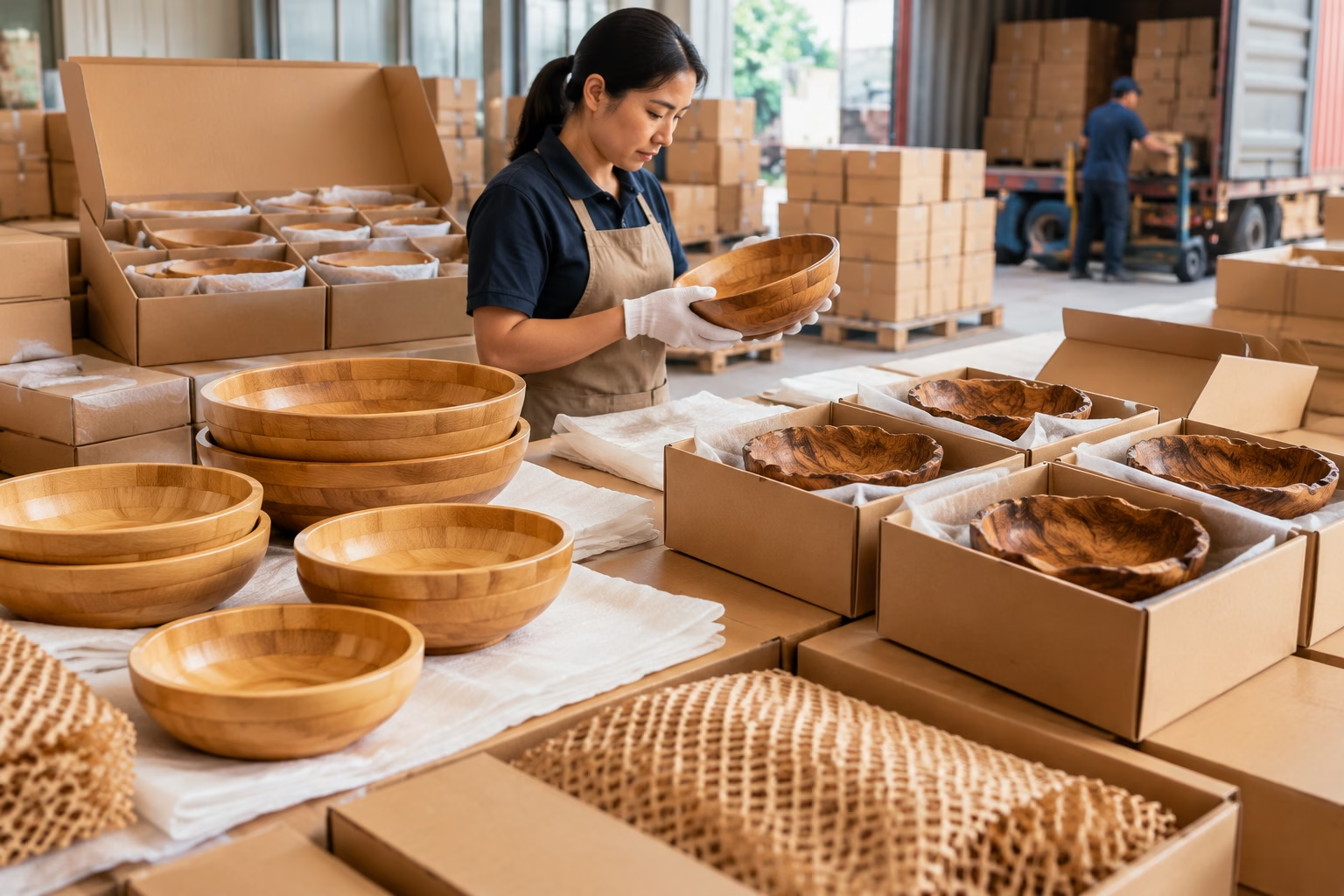
Buyer Inputs and Manufacturer Confirmation: What Must Be Agreed
A clear request begins with the intended-use statement and then separates fixed decisions from preferences and open questions. The buyer should provide the destination market, proposed claims, food or non-food contents, quantity, branding goals, packaging objectives, reference drawings or samples and any required evidence. Missing values should be requested and resolved, not filled with generic assumptions.
Document-Request List for a Custom Bowl Project
- Use and claims: Intended contents, handling conditions, cleaning expectations, destination market and proposed consumer-facing wording.
- Product definition: Drawing or reference sample, outside and usable dimensions, capacity method, construction, material direction, finish and appearance reference.
- Branding: Logo artwork, location, size, colour, application method and approval owner.
- Packaging: Retail format, inserts, labels, barcodes, quantities, protection expectations, carton information and pack-out requirements.
- Evidence: Buyer or authority requirements, material and finish information, requested inspection records and any food-contact review scope.
- Open decisions: Fields marked fixed, preferred or open, with the party responsible for confirmation.
SHENGLIAN’s OEM, ODM and private-label routes can be matched to how complete this information is: a controlled drawing or approved sample supports an OEM-style brief, while an open concept may require development before a final specification is possible. A private-label route also requires coordinated control of the product, branding and retail packaging. The service label itself does not determine intellectual-property ownership or guarantee feasibility.
Before requesting a sample or quotation, send the completed brief with the intended-use statement, destination, controlled references, packaging goals and evidence questions. SHENGLIAN can then confirm which construction and finish details can be assessed, what information is available or must be requested, and which open fields need resolution before approval. For development work, Prototype and Sample Development provides the appropriate starting point.
Technical references: Product Positioning Defined.
Frequently Asked Questions
Can a decorative wooden bowl be sold as food safe?
Not on appearance or material alone. A food-contact claim requires review against the destination market, intended contents, finish information and an applicable buyer or authority requirement. Keep decorative positioning separate until that review is defined.
How is the capacity of a wooden serving bowl measured and stated?
Use measured fill volume or usable internal geometry. Record the unit, measurement method, reference condition and sample basis. External dimensions do not establish usable capacity.
Does bamboo change the serving versus decorative decision compared with wood?
No universal material preference decides the route. Bamboo or wood should be selected according to the intended use, construction, appearance, destination, finish and evidence needs of the project.
What evidence should I request for a food-contact serving bowl project?
Request material and finish information, destination-market requirements, intended foods, cleaning conditions, proposed labels and the defined review method. Do not treat a sample appearance as proof of food-contact suitability.
Can the same bowl design be developed in both serving and decorative versions?
Yes, but create separate briefs with distinct intended-use statements, claims, finish and care expectations, sample criteria and packaging. A shared silhouette does not make the two versions technically interchangeable.
What packaging differences matter for retail serving bowls versus gift decorative bowls?
Serving packaging should address protection of relevant surfaces and consistent care information. Decorative packaging may emphasize gift presentation and visible-face protection. Both require separate product, retail, inner-pack and export-carton specifications.