
ODM Bamboo and Wood Product Development
SHENGLIAN Bamboo & Wood Products supports overseas brand owners, retailers, importers, distributors, private-label operators and corporate gift buyers developing new bamboo and wooden products. Our integrated team reviews concepts, drawings or reference samples and coordinates material selection, structural development, prototyping and revisions toward a product that can be assessed for production. Share the intended use, product direction and available references to begin an ODM feasibility discussion. Buyers with defined specifications, quantities and commercial requirements can proceed through the custom product quote route.
When Manufacturer-Led ODM Development Fits
ODM development is suitable when you know what the product should achieve but do not yet have a complete production-ready design. You may have a market concept, a rough sketch, a product category, a reference sample or a visual direction that needs technical development. The development work connects the commercial idea with the realities of bamboo and wood processing. Intended use, appearance, dimensions, structure and function must work together. A manufacturer-led review can identify open decisions early and create a clearer path from concept to prototype and later production assessment. Typical starting points include: For a specification-led project, compare the available bamboo and wood product customization services to select the most suitable route.
A New Kitchenware, Tableware, Home Organization, Bathroom, Office or Homeware Concept.
A Product Idea That Needs Bamboo or Wood Material Direction.
A Reference Product That Must Be Adapted for a Different Size, Function or Appearance.
A Product Range That Needs Related Forms or Dimensions for a Consistent Commercial Offer.
A Branded Gift or Promotional Product Concept That Requires a Producible Structure Before Packaging and Decoration Are Finalised.
Start with a Clear ODM Development Brief
A focused brief gives the development team a working basis for technical discussion. It does not need to contain every final detail at the beginning, but it should identify the product's purpose and the decisions that matter most to your market. Useful starting information includes the intended use, target users, approximate dimensions, required functions, preferred product format, visual references and expected order direction. Drawings, sketches, photographs or physical reference samples can all help communicate the intended result. During the initial review, we can separate essential requirements from preferences and identify details that need further definition. These may include the relationship between components, the way the product is handled, the desired appearance and the processing route that may be needed. A well-defined brief reduces avoidable changes later because the development discussion is based on the same product goal.

Choose Bamboo or Wood Around the Product Use
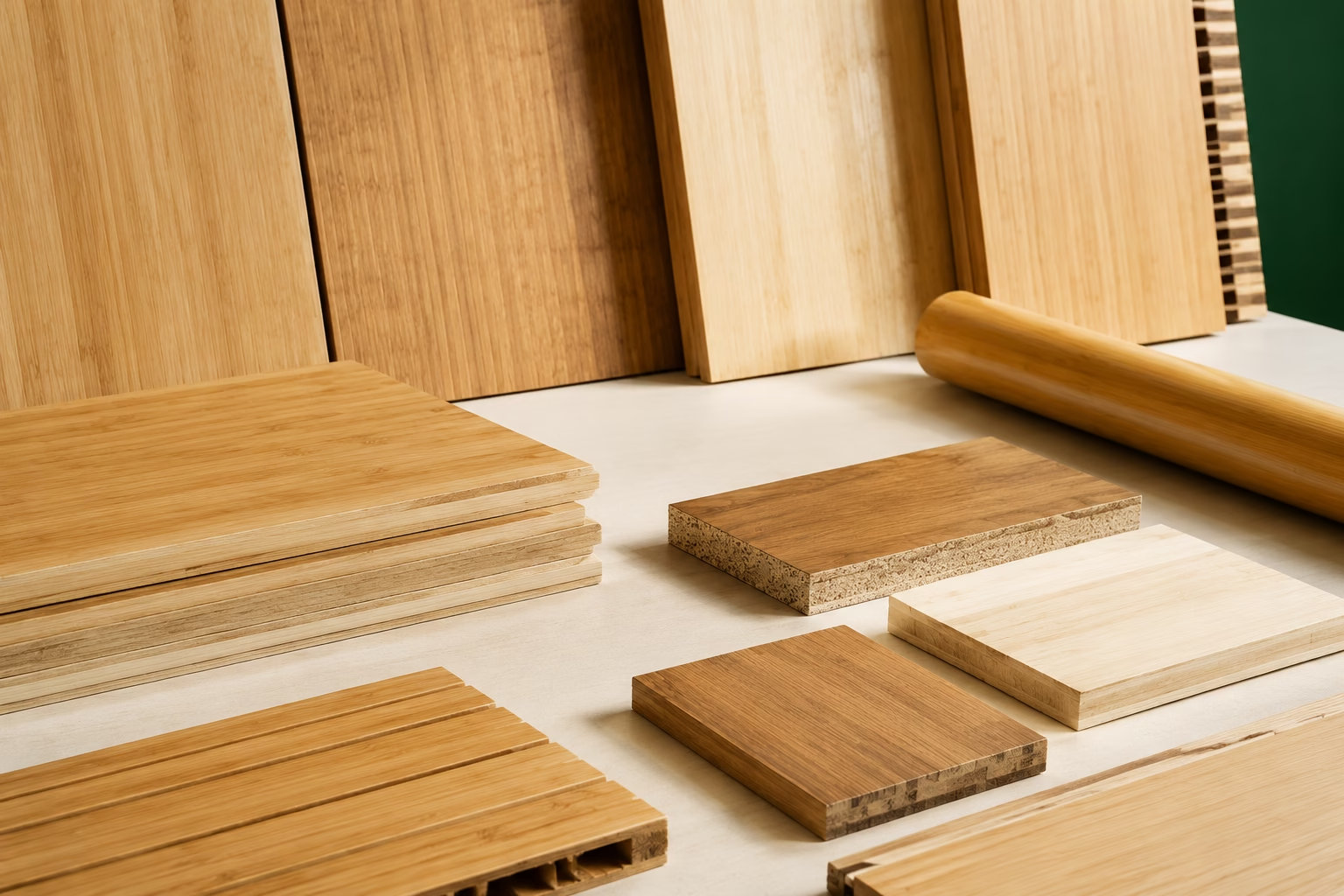
Material selection is part of product development rather than a separate cosmetic choice. Bamboo or wood should be considered in relation to the product's intended use, structure, appearance, processing requirements and any applicable testing needs. For example, a product brief may require a particular visual character, a defined component structure or a surface suitable for a specific finishing approach. The material direction must also be compatible with the proposed dimensions and manufacturing route. We can discuss these relationships during development without assuming an unconfirmed species, grade, coating or performance property. For a wider comparison framework, see our guide to choosing bamboo or wood for a product . An active ODM project can then apply the relevant decision criteria to its own use, design and commercial requirements. For bamboo and wooden products intended for food-contact applications, testing can be arranged according to customer and destination-market requirements. Applicable standards, laboratories, reports and certifications are confirmed for each project, so they should be identified early when the product is intended for kitchen or dining use.
Develop Structure, Dimensions and Function Together
A production-ready product needs more than an attractive outline. Structural development defines how components relate to one another, how dimensions are established and how the intended function is expressed in the physical product. Our team supports structural development and dimensional adjustment for customer requirements or reference samples. Depending on the brief, development decisions may address product material, structure, dimensions, appearance and functionality. The exact decisions vary by product. A storage item may require a clear compartment layout, while a serving product may require attention to proportions, handling and component relationships. Important questions include: These questions give the development team a practical basis for assessing the concept against available processes. They do not replace project-specific technical approval, which remains necessary before bulk production.
What Must the Product Hold, Support, Contain or Organise?
Which Dimensions Are Fixed by the Intended Use or Available Space?
Which Components Need to Connect, Align or Be Assembled?
Which Visual Features Are Essential to the Product Concept?
Which Details Are Preferences That Could Change During Feasibility Review?
Use Drawings and Reference Samples as Development Inputs
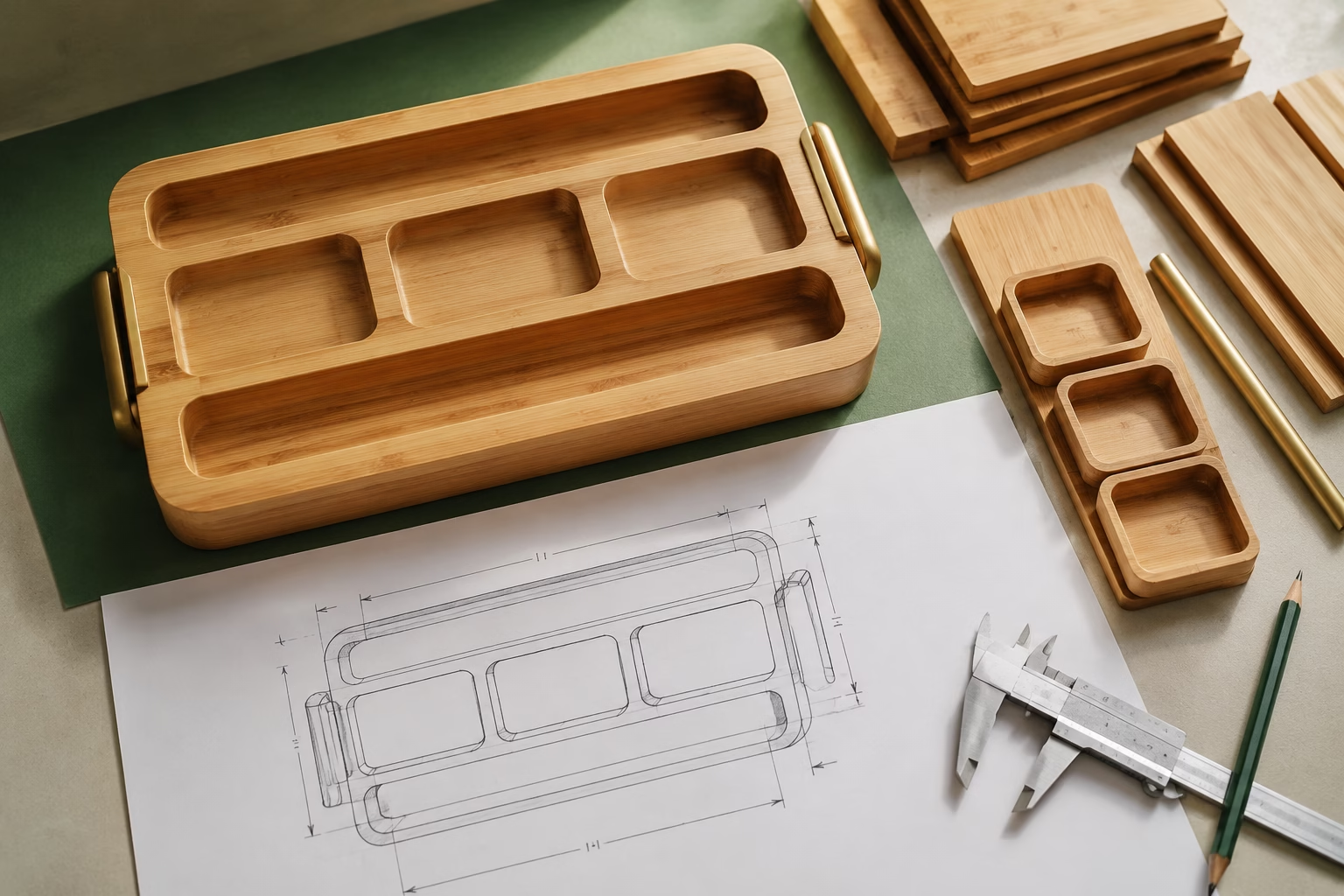
Drawings, sketches and reference samples are useful ways to communicate form, proportions and intended function. They provide a starting point for discussion, but a reference item is not automatically a complete production specification. We review the information supplied and identify unresolved details that may affect development. A drawing may show overall dimensions but leave component construction open. A reference sample may communicate the desired form but not the material, internal structure or finish. These gaps can be addressed through questions, technical decisions and revisions as the concept becomes more defined. The purpose of this review is to preserve the important product intent while assessing how it can be developed for bamboo or wood. Where the concept requires a different size, appearance or function, the proposed changes can be discussed before the product moves toward a prototype or sample review.
Move from Concept to Prototype and Product Definition
ODM development generally progresses through a series of decisions: an initial concept review, a proposed development direction, prototype or sample work, buyer feedback, revisions and a product definition suitable for manufacturing assessment. Prototype and sample work provides a physical or otherwise reviewable expression of the current design direction. Feedback may concern proportions, dimensions, structure, appearance or function. The number and scope of revisions depend on the product structure, processing requirements and the information that remains open in the brief. Bulk production is considered only after the product specifications, sample direction and commercial details have been approved. Development therefore creates a clearer handoff, but it does not remove the need for project-specific approval. Sample timing and revision arrangements are handled according to the requirements of the individual project.
Review the Concept, Drawing or Reference Sample.
Define the Material, Structural and Dimensional Decisions That Require Attention.
Develop a Product Direction for Technical Discussion.
Produce and Review a Prototype or Sample as Required.
Record Feedback and Make Agreed Revisions.
Confirm the Product Information Needed for Manufacturing and Quotation.
Check the Concept Against Available Processing Routes
Development decisions need to connect with the processes available for the proposed product. SHENGLIAN's verified manufacturing capabilities include raw material preparation, cutting and forming, panel joining and pressing, CNC machining, precision sanding, surface finishing, laser engraving, screen printing, assembly, inspection and packaging. These processes provide evidence for a practical feasibility discussion. For example, a proposed shape or component arrangement may need to be considered alongside cutting, forming, CNC machining or assembly requirements. Surface and appearance decisions can be reviewed in relation to sanding and finishing. Branding and packaging can be addressed when they affect the product definition, while detailed branding and retail presentation remain separate project workstreams. Read more about our manufacturing capabilities when you need a deeper view of the available processing routes. The development team can use the concept information to discuss alignment with those routes without promising an unconfirmed process result.
Questions Buyers Ask About ODM Development
It is a manufacturer-led process for turning a product concept, drawing or reference sample into a more defined item that can be assessed for production. The work may include material selection, structural development, dimensional adjustment, prototyping and sample revisions. Yes. SHENGLIAN can review concepts, drawings and reference samples as development inputs. The review identifies the product requirements and open technical details that need to be addressed before the item is considered for manufacturing. Provide the intended use, target users, approximate dimensions, required functions, visual references, preferred material direction, appearance expectations, estimated quantity and any known destination-market requirements. Drawings or samples are useful when available. Material direction is considered alongside intended use, structure, appearance and processing requirements. Specific material details are confirmed for each project rather than assumed from the product category. Food-contact requirements may also affect the review. Yes. Customer-approved requirements or reference samples can guide adjustments to material, structure, dimensions, appearance and functionality. The scope of change depends on the product concept and the processing requirements identified during review. Prototype or sample feedback is reviewed against the intended product requirements. Revisions may address structure, dimensions, appearance or function. The number and scope of revisions depend on the product and the information still open, and bulk production requires approved product and commercial details.
What Is ODM Bamboo and Wood Product Development?
It is a manufacturer-led process for turning a product concept, drawing or reference sample into a more defined item that can be assessed for production. The work may include material selection, structural development, dimensional adjustment, prototyping and sample revisions.
Can SHENGLIAN Develop a Product from a Concept or Reference Sample?
Yes. SHENGLIAN can review concepts, drawings and reference samples as development inputs. The review identifies the product requirements and open technical details that need to be addressed before the item is considered for manufacturing.
What Information Should I Provide for an ODM Concept Review?
Provide the intended use, target users, approximate dimensions, required functions, visual references, preferred material direction, appearance expectations, estimated quantity and any known destination-market requirements. Drawings or samples are useful when available.
How Are Bamboo and Wood Materials Selected for a New Product?
Material direction is considered alongside intended use, structure, appearance and processing requirements. Specific material details are confirmed for each project rather than assumed from the product category. Food-contact requirements may also affect the review.
Can the Structure, Dimensions and Functionality Change During Development?
Yes. Customer-approved requirements or reference samples can guide adjustments to material, structure, dimensions, appearance and functionality. The scope of change depends on the product concept and the processing requirements identified during review.
How Are Prototype Revisions Handled Before Manufacturing?
Prototype or sample feedback is reviewed against the intended product requirements. Revisions may address structure, dimensions, appearance or function. The number and scope of revisions depend on the product and the information still open, and bulk production requires approved product and commercial details.
FAQ
Frequently Asked Questions
ODM bamboo and wood product development is a manufacturer-led process for turning a concept, drawing or reference sample into a more defined item that can be assessed for production. The work may include material selection, structural development, dimensional adjustment, prototyping and sample revisions.
Yes. SHENGLIAN can review concepts, drawings and reference samples as development inputs. The review identifies product requirements and open technical details that must be addressed before the item is considered for manufacturing.
Provide the intended use, target users, approximate dimensions, required functions, visual references, preferred material direction, appearance expectations, estimated quantity and known destination-market requirements. Drawings or samples are also useful when available.
Material direction is considered alongside the intended use, structure, appearance and processing requirements. Specific material details are confirmed for each project rather than assumed from the product category. Food-contact requirements may also affect the review.
Yes. Customer-approved requirements or reference samples can guide adjustments to material, structure, dimensions, appearance and functionality. The scope of change depends on the product concept and the processing requirements identified during review.
Prototype or sample feedback is reviewed against the intended product requirements. Revisions may address structure, dimensions, appearance or function. Their number and scope depend on the product and information still open, and bulk production requires approved product and commercial details.
Prepare for an ODM Concept Discussion
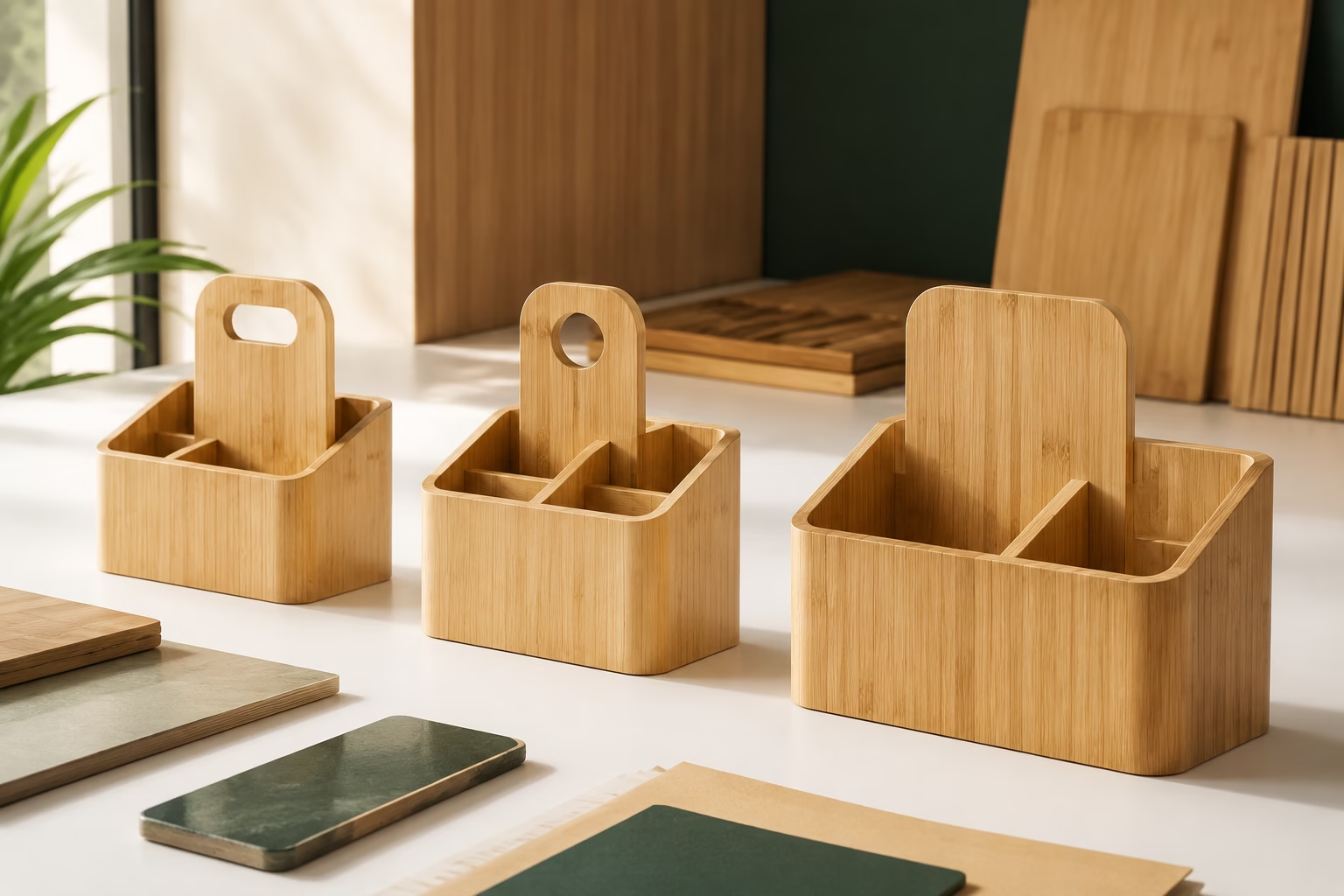
Send the information you already have, even if the design is not final. The most useful starting package includes a concise concept description, intended use, reference images or samples, available drawings, target dimensions, preferred bamboo or wood direction, required functions and appearance expectations. Also include an estimated quantity, target sales channel and any known destination-market requirements. If the item may be used for food contact, identify that use at the beginning so the applicable testing discussion can be considered. These inputs help us focus the feasibility conversation on the decisions that affect the product. Buyers with an early concept and unresolved technical questions can request a product development consultation . Buyers who already have defined specifications, quantity and commercial requirements can request a custom product quote . Discuss an ODM Concept