
Is bamboo good for bathrooms? Sometimes. Bamboo can be suitable for organizers, soap dishes, trays and other accessories exposed to normal bathroom humidity and occasional splashes, but it should not be treated as waterproof, maintenance-free or suitable for standing water. The finished product needs to match its placement, construction, joints, finish, ventilation and care routine.
For a custom or private-label programme, SHENGLIAN Bamboo Wood Factory evaluates the proposed item as a product rather than making a blanket judgment about bamboo. The starting point is the intended use, followed by controlled dimensions, construction, finish, sample evidence and packaging. Buyers can also review the relevant Bamboo and Wooden Bathroom and Spa Products range before defining a product brief.
Is Bamboo Good for Bathrooms? Judge the Finished Accessory, Not Bamboo Alone
Bamboo and other wood-based materials exchange moisture with the surrounding air. Their dimensional behavior depends on the material, construction, moisture condition and service environment. A bathroom accessory may therefore perform differently in a ventilated vanity area than beside a shower or under wet soap.
Use this six-point suitability gate before selecting a construction:
- Exposure: Identify humidity, splashes, wet-item contact, retained water and any direct spray.
- Geometry: Check drainage, raised contact points, seams, edges, recesses and areas where water can collect.
- Finish: Match the proposed finish and care instructions to the actual cleaning and wet-use routine.
- Ventilation: Consider airflow around the product and whether it can dry between uses.
- Care: Define wiping, drying, cleaning and storage expectations for the buyer or end user.
- Evidence: Require a controlled drawing or sample, product-specific material and finish information, and an agreed evaluation method.
This distinction matters for bamboo bathroom product durability. A product can be appropriate for intermittent humidity while remaining unsuitable for continuous saturation. For OEM, ODM and private-label work, the exposure pattern and responsibility for the design should be agreed before dimensions, branding and packaging are finalized.
Map Bathroom Moisture Exposure Before Selecting Bamboo Construction
Begin with the location and the way water reaches the accessory. Airborne humidity creates moisture exchange, while repeated splashes, wet objects, trapped water and shower spray create progressively more demanding conditions. Potential concerns include finish wear, staining, odor, joint stress and dimensional movement. These are design and evaluation questions, not automatic proof of failure.
| Accessory use | Typical moisture concern | Design response to review | Evidence to request |
|---|---|---|---|
| Vanity organizer | Sink splashes and wet items retained inside or underneath | Airflow gaps, raised contact points and cleanable surfaces | Placement details, drawing and care guidance |
| Soap dish | Repeated wet-soap contact and water beneath the soap | Drainage, sloped or open geometry, seams and base review | Annotated design, finish information and wet-use sample check |
| Countertop tray | Water collected under containers or transferred from the counter | Separation from wet surfaces and defined contact areas | Overall and usable dimensions, finish and inspection method |
| Bath tray | Wet and dry zones, bath contact and occasional splashing | Confirmed bath fit, support, adjustment and drainage expectations | Fit drawing, approved sample and destination conditions |
Ask the manufacturer to identify seams, exposed edges, drainage grooves, raised feet, contact points and water-collection areas on a drawing or photograph. Also state the destination environment, moisture measurement method, reference condition and sample basis. An 8-12% moisture range may serve as a conditional indoor planning reference, but it is not a universal acceptance limit or a guarantee against movement. The project method, sample and destination conditions control.
Example: Applied Exposure Review
A buyer is developing a private-label bamboo soap dish for a humid bathroom near a sink. The known conditions are repeated splashes, wet soap that may retain water beneath it, and a requirement for retail packaging. Because the brief does not yet define drainage, contact surfaces, finish limitations, cleaning routine or destination conditions, the appropriate decision is to proceed only to sample development, not to make a waterproof or maintenance-free claim. The next action is to request an annotated design review, finish and care information, controlled dimensions, an evaluation checklist and a pack-out sample.
Match Bamboo Bathroom Accessories to Realistic Use Conditions
Accessory categories help organize the discussion, but they do not prove performance. A vanity organizer should be assessed for sink splash exposure, airflow and whether damp items will remain inside it. A soap dish needs cleanable geometry and a base that does not unnecessarily retain water. Countertop trays and storage pieces may need raised contact points or separation from wet surfaces.
Bath trays require a more specific brief. Confirm the bath fit, overall and adjustment length, support, usable zones, wet and dry areas and finish expectations. Outside dimensions are not the same as usable dimensions, and a tray that fits a bathtub may still need separate review of stability, contact points and areas exposed to water.
For each product type, the buyer should record the exposure pattern, critical dimensions, design response, care expectation and required evidence. A controlling drawing or approved sample should show the dimensions that affect function, while material and finish information should relate to the exact proposed product rather than an unrelated bamboo item.
Before locking design responsibility, clarify whether the brief is OEM-led, with buyer-controlled drawings or samples; ODM-led, with concept development still open; or private-label-led, with product presentation and retail packaging controlled together. These routes affect who supplies the controlling information, who approves changes and which evidence must be available before release.
Specify Construction, Grain Direction, Moisture Condition and Finish
Once the exposure is understood, the buyer needs a product brief that describes the finished accessory rather than relying on the word “bamboo.” State whether the item is solid, laminated, panel-based or multi-component. Record grain direction, natural variation, exposed end grain, seams, joints, recesses and other geometry that may affect movement, cleaning or fit.
Moisture information is useful only when its basis is clear. Record the reference condition, measurement method, sample basis, unit and destination environment. The 8–12% range may serve as a conditional indoor planning reference, but it is not a universal acceptance limit or a SHENGLIAN production promise. The proposed product, method and service conditions still require project confirmation.
Use a Specification Brief With Decision Owners
- Fixed: intended use, critical dimensions, functional features, appearance requirements and approved claims.
- Preferred: construction route, grain presentation, finish appearance, packaging style and branding position.
- Open: unresolved material details, tolerances, care wording, testing needs or destination requirements.
- Evidence: exact-product material and finish data, drawings, approved samples, moisture records or relevant test information.
- Owner and method: identify who confirms each field, how it will be measured and which reference condition applies.
Finish instructions should match the actual product and care routine. Define sanding and appearance expectations, finish coverage, cleaning limitations and any performance wording that needs evidence. Do not transfer finish information from another bamboo item without checking the construction, exposed surfaces and intended bathroom use.
Control Dimensions, Machining, Joinery, Branding and Sample Approval
A bathroom accessory becomes easier to evaluate when its functional dimensions are separated from its appearance dimensions. Record overall dimensions, usable or internal dimensions, critical fits, clearances and project tolerances. For a bath tray, this may include bath fit, support and usable wet and dry zones. For an organizer or soap dish, it may include contact points, drainage openings and the space needed for the intended contents.
Cutting, forming, panel pressing, CNC work, sanding, finishing, branding and assembly should follow an agreed construction. The process name alone does not prove suitability. Inspect edges, joints, bonded interfaces, surface coverage, decoration and branding against the controlling drawing, artwork, finish reference and physical sample.
Sample Approval Checklist
- Dimensions: measure overall, usable and critical functional dimensions using the agreed method and reference condition.
- Construction: check material form, grain presentation, seams, joints, edges, drainage and support features.
- Surface: inspect sanding, finish appearance, coverage, exposed end grain and visible natural variation.
- Function: verify fit, clearances, stability, drainage and intended use with the agreed contents or placement.
- Branding: compare logo position, decoration, artwork and labels with the controlled files.
- Packaging: check retail presentation, protection, inserts and pack-out against the approved packaging brief.
Sample approval is a release decision, not a replacement for production inspection. A plain-language release log should identify each drawing, specification, artwork file, packaging brief and physical sample by its own identifier, revision and approval date. It should also show which exact versions were reviewed and approved together, with any deviations recorded before production release.
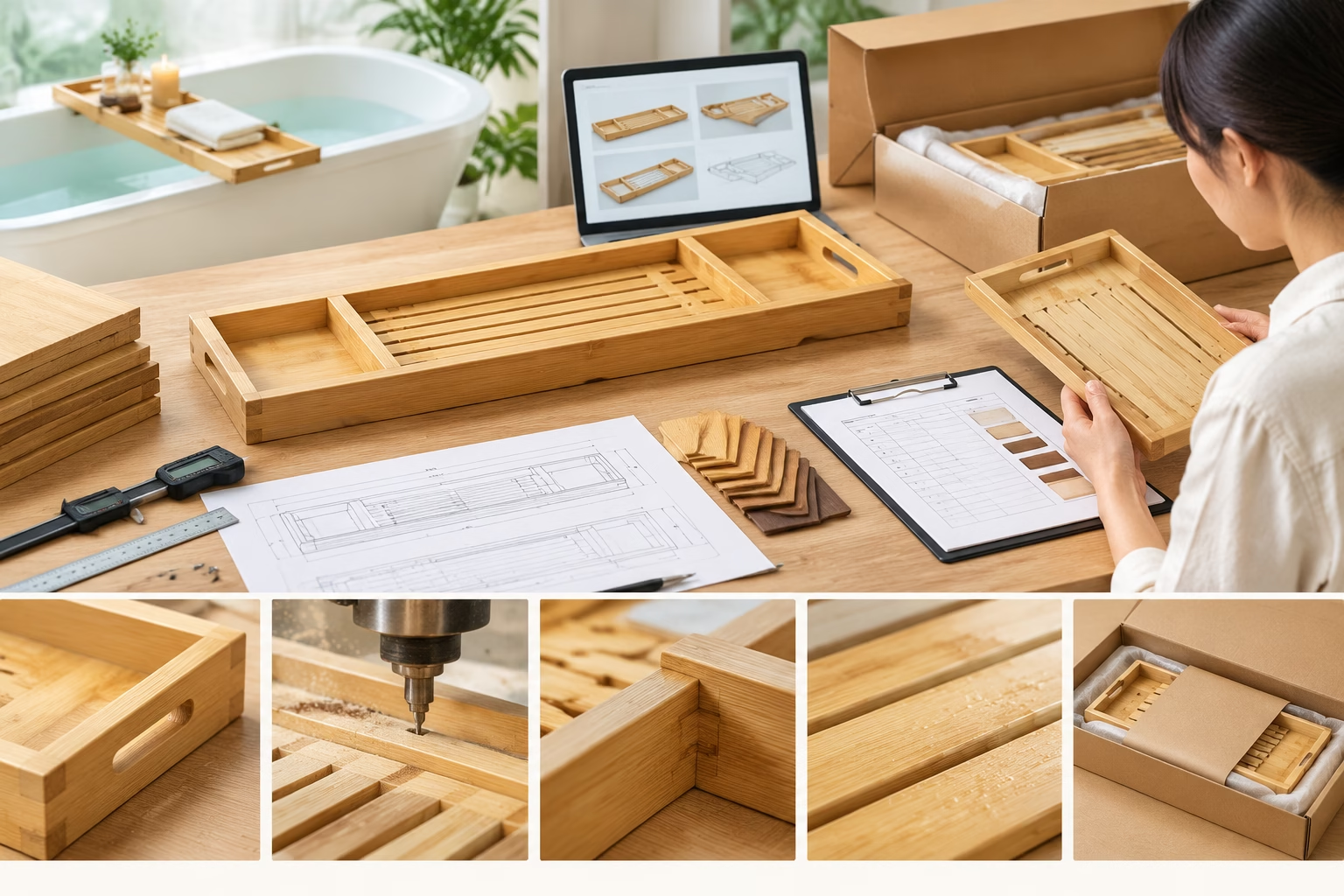
Build the Quality-Control and Packaging Plan Around Bathroom Risk
Bathroom risk should shape the inspection plan. For each quality-control gate, define the characteristic, measurement or inspection method, sample basis, acceptance criterion, record and disposition. Relevant checks may include dimensional mismatch, movement-related fit issues, drainage execution, joints, surface defects, finish coverage, decoration, missing components and packaging damage.
Acceptance criteria must come from the approved product requirement, not from an unstated default sampling plan or universal tolerance. Material moisture or finish evidence should also remain separate from transport compliance. ISPM 15 concerns regulated wood packaging material used in international trade; it does not automatically apply to every finished bamboo or wood consumer product. Confirm the scope with the importer and relevant national plant-protection authority.
Document Request Before Release
- Controlled specification or drawing covering use, material, construction, dimensions, appearance and function.
- Exact-product finish information, care wording and any limitations on wet exposure or cleaning.
- Approved physical sample, artwork, packaging hierarchy and release record.
- Inspection plan with methods, sample basis, acceptance criteria, records and nonconformity disposition.
- Measurement records, relevant test evidence and photographs of critical drainage, edges, joints and surfaces.
- Pack-out evidence covering quantities, labels, barcodes, inserts, carton dimensions and destination requirements.
For a custom programme, buyers can organize these inputs through SHENGLIAN’s custom product RFQ guide. A focused request should identify the bathroom environment, construction expectations, critical dimensions, finish and care requirements, branding, packaging, destination and evidence needed. Where the brief remains open, use Prototype and Sample Development to resolve the design and approval basis before bulk production.
For related quality-control and evidence context, see Food-Contact Testing Requirements Guide.
Frequently Asked Questions
Is bamboo waterproof in a bathroom?
No. Bamboo is not automatically waterproof, maintenance-free or suitable for standing water. Finished-product suitability depends on construction, geometry, finish, ventilation, care and the actual exposure pattern.
Which bathroom conditions create the highest moisture risk?
Retained water, repeated splashes, wet-item contact, shower spray, poor airflow and prolonged saturation create more demanding conditions than ordinary airborne humidity.
Are bamboo soap dishes suitable near a sink or shower?
They may be suitable when drainage, contact surfaces, finish limitations, cleaning routine and placement are specifically reviewed. A sample should be evaluated before making a wet-use claim.
What should a buyer specify for a bamboo bath tray?
Specify bath fit, overall and adjustment dimensions, support, usable zones, wet and dry areas, construction, finish, care instructions, branding and packaging. These details require project confirmation.
How should bamboo bathroom samples be evaluated?
Check dimensions, fit, stability, drainage, joints, edges, finish coverage, appearance, branding and packaging against the controlling files and agreed inspection method.
Does ISPM 15 apply to every bamboo or wood bathroom product?
No. ISPM 15 addresses regulated wood packaging material in international trade. Confirm whether the shipping materials in a specific order fall within its scope.