
For private-label tableware, bamboo may suit a collection that calls for a more linear, panel-based appearance, while wood may fit a concept built around species character and natural grain variation. Neither is automatically the better choice: use, bowl geometry, finish, branding and packaging all affect the decision. SHENGLIAN Bamboo Wood Factory evaluates these as project-specific options; buyers can start with the Custom Bamboo and Wooden Bowls range and compare proposed constructions against one bowl brief.
Here, “bamboo bowl” can refer to a bowl formed from a laminated or panel-based construction, while a wooden bowl may be shaped from a solid blank. Those forms create different visual patterns and construction details, but the material name alone does not establish suitability or performance. The sections below show how to connect collection priorities to the information and samples needed for a meaningful comparison.
Bamboo vs. Wooden Bowls: The Short Answer for Private-Label Buyers
Start with the collection concept, then test it against the bowl’s role and proposed construction. A panel-based bamboo look may be worth sampling when visual consistency and linear patterning matter. A wood option may be worth sampling when flowing grain, species character or unit-to-unit variation is part of the intended presentation. In either case, the actual sample—not a material label or rendering—helps establish how the finish, joins and shape work together.
Use this priority-to-sample guide to turn an initial preference into a supplier discussion. It is a starting point, not a claim that either construction is universally available or preferable for every bowl.
| Buyer priority | Information to provide | Sampling direction |
|---|---|---|
| Linear, panel-based visual direction | Reference imagery and preferred pattern, color and visible-join expectations | Ask whether a proposed bamboo panel construction can be evaluated against the brief |
| Distinctive grain and natural variation | Preferred visual range and which natural features are acceptable | Compare representative wood samples and define an acceptable appearance range |
| Coordinated bowls or a multi-size range | Use, sizes, nesting needs, finish and consistency priorities | Sample the shortlisted material or both, checking the set as a collection |
| Branding and retail presentation | Logo artwork, proposed location, finish direction and packaging concept | Review decoration and pack fit on a physical sample of the proposed bowl |
For bamboo, fiber direction and panel layout influence the visible pattern; for wood, grain direction contributes to the appearance of a shaped bowl. Material preparation and conditioning also matter, but moisture references should be stated for the specific project and measurement method rather than treated as universal acceptance limits. SHENGLIAN’s selection approach compares use, construction, dimensions, appearance, process and commercial context instead of assigning fixed performance categories to bamboo or wood.
Match the Bowl Material to Its Role in the Collection
A serving bowl, hospitality piece, display item and gift-set bowl may share a general shape but serve different commercial roles. Before comparing materials, describe what the bowl will hold or present, how it will be handled, whether it must nest with other bowls, and how it fits the wider assortment. These details can change the importance of the rim, base, usable interior and packaging just as much as the preferred look.
Separate outside dimensions from usable dimensions. Outside measurements describe the overall footprint; usable internal measurements describe the space available inside. If capacity matters, specify how it will be measured—such as measured fill volume under an agreed method—rather than inferring it from external dimensions. Review the rim, wall profile and base together, particularly when nesting or stable placement is important.
Buyer inputs to include in the collection brief
- Use and destination: serving, dining, hospitality, display or gifting; intended contents; sales market; and any buyer-defined care or food-contact evidence needs.
- Collection role: related products, planned size range, nesting expectations, retail position and whether visual consistency or natural variation is preferred.
- Product reference: a drawing, physical reference or concept imagery showing the bowl in context, with known outside and usable dimensions identified separately.
- Commercial route: clarify whether the project is based on buyer-controlled drawings or samples, an open development concept, or a defined product requiring private-label branding and retail packaging.
SHENGLIAN structures a custom brief around use, material, dimensions, construction, appearance, branding, quantity, packaging and destination. Provide fixed decisions where they are already set, mark preferences that can be discussed, and leave unresolved points open rather than filling them with assumptions. A reference bowl or assortment image can help explain the intended role, but feasibility and final dimensions still need review against the proposed design.
Construction and Appearance: What Bamboo and Wood Actually Look Like in a Bowl
Construction affects what buyers see on the inside, outside, rim and base. Bamboo bowls commonly use laminated or panel-based construction, where joined material can produce a more linear pattern and may leave visible transitions. A wooden bowl shaped from a solid blank may show flowing grain, with natural variation between pieces. These are broad construction descriptions, not guarantees about a specific design: joins, pattern and finish depend on the proposed material and bowl geometry.
| Appearance point | Bamboo panel-based option | Wood option | What to assess on a sample |
|---|---|---|---|
| Visual pattern | May show a more linear or layered pattern | May show flowing grain and more individual variation | Interior, exterior, rim and base under consistent viewing conditions |
| Unit-to-unit consistency | Depends on panel construction and finish | Natural grain and color variation may be more prominent | Whether the proposed range suits product photography and assortment presentation |
| Joins and edges | Panel transitions may be visible | Appearance depends on blank, shaping and design | Rim, base and any visible transitions or construction details |
| Finish impression | Can affect pattern contrast and surface appearance | Can change perceived grain, color and sheen | Color, surface feel, sheen and branding legibility on the actual bowl |
Specify acceptable color and pattern variation, visible joins and edge feel before sample approval. SHENGLIAN’s verified manufacturing stages include material preparation, cutting or forming, panel joining or pressing, CNC forming, sanding and finishing; not every bowl uses every stage. The relevant route depends on the design. Compare physical samples at the interior, exterior, rim and base, and state the material’s conditioning or moisture reference for the project rather than using a generic threshold.
Dimensions, Capacity and Functional Tolerances to Specify
A useful bowl specification distinguishes overall size from the space the bowl provides. State units and identify the measurement method and reference condition for each critical value. If a retailer or buyer has dimension limits, name the dimensions that matter most. A proposed bowl’s wall profile, base shape and rim should be considered alongside its outside measurements, since these features affect usable space, nesting and fit within the assortment.
Dimensional specification brief
- Outside dimensions — fixed or preferred: overall diameter or length and width, plus height; state units and measurement points.
- Usable internal dimensions — fixed or preferred: internal opening and usable depth, measured at defined locations.
- Capacity — if needed: specify the agreed fill-volume or usable-geometry method, the fill condition and the sample or drawing being assessed. Do not derive capacity from outside dimensions.
- Functional details — fixed, preferred or open: wall profile, rim, base, stability, nesting and any coordinated-product fit.
- Critical tolerances and reference condition — to be agreed: identify priority dimensions and the drawing, sample, measurement method and material-conditioning reference used for evaluation.
SHENGLIAN measures critical and usable dimensions and checks function against the controlled drawing and approved sample. For a custom project, the buyer and manufacturer should agree which dimensions are critical, how they will be measured, and what material reference condition applies before setting acceptance criteria. Capacity should likewise be recorded only with a defined method and the specific bowl geometry under review.
Branding, Finish and Packaging for Private-Label Bowls
A logo must remain legible on the finished bowl, while the pack must present and protect the approved product. Assess these decisions together: curvature, visible joins, bamboo panel patterns and wood grain can change how decoration reads and where it belongs.
Compare physical samples for finish color, sheen, surface feel and logo contrast. Bamboo panel surfaces and wood grain surfaces can respond differently to finishing; a rendering cannot establish the acceptable result. Record the intended finish system and proposed care copy alongside the product’s intended contents and destination market.
For food-contact applications, use the Food-Contact Testing Requirements Guide to organize documentation questions about the proposed material, finish and decoration. Determine the applicable evidence from the final specification and intended use before approving food-contact or care claims.
Branding and Packaging Decision Checklist
- Decoration: supply artwork, proposed method, location, size and orientation; assess legibility on the finished curved surface.
- Product presentation: define the customer-facing arrangement and which bowl surfaces remain visible.
- Retail pack: state the sales unit, pack fit, artwork, labels, barcodes and inserts.
- Inner packing: identify product orientation, separation and protection between packed units.
- Export carton: establish dimensions, quantities and markings from the approved pack-out.
SHENGLIAN Bamboo Wood Factory separates these packaging levels so presentation choices and shipping needs receive distinct attention. Protective materials and carton quantities follow the actual bowl and pack configuration.
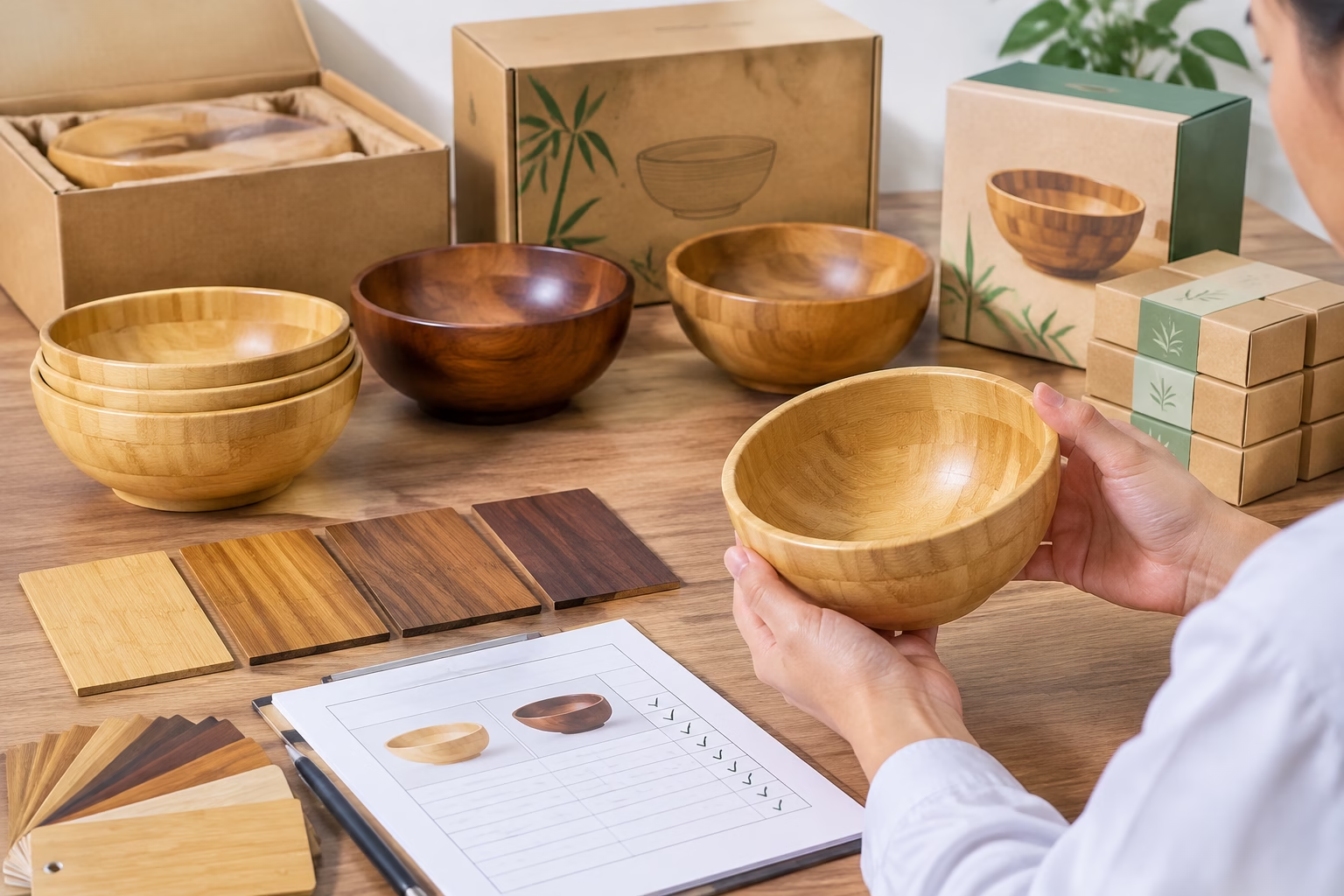
Sampling, Approval and Quality Control Workflow
Send the bowl brief with drawings or references, then evaluate representative samples against the priorities established earlier. SHENGLIAN records approval of dimensions, construction, appearance, function, branding and packaging against the relevant files and physical sample. Its Prototype and Sample Development guidance supports this transition from concept to approval.
Copyable Bowl Brief and Sample-Approval Checklist
Mark each field fixed when it must be met, preferred when alternatives are acceptable, or open when supplier input is needed. Add the supporting drawing, sample, measurement or document beside each entry.
- Use and material: intended contents, collection role, destination, proposed material and construction.
- Geometry: outside and usable dimensions, units, measurement points, capacity method, rim, wall, base and nesting priorities.
- Appearance: acceptable color and grain or panel variation, visible joins, surface feel and finish reference.
- Branding and packaging: artwork, placement, sales unit, pack levels, labeling and care copy.
- Acceptance basis: critical tolerances, measurement method, sample conditioning or moisture reference, applicable documents and unresolved decisions.
- Approval outcome: accepted features, deviations, required corrections and whether another sample is needed.
Resolve open feasibility questions and acceptance criteria with the manufacturer before production release. Each specification, drawing, artwork file, packaging brief and physical sample may have its own identifier, revision and approval date. Maintain one release log cross-referencing the exact versions approved together, with each item’s status and outstanding actions.
Sample approval establishes the comparison basis; production inspection checks whether manufactured units meet it. Agree staged checks for material and construction, critical dimensions, joint or fit issues, surface defects, decoration alignment, function and packaging damage. Compare measurements and function under the stated reference condition, retaining inspection and pack-out records.
Hypothetical Buyer Scenarios: Applying the Framework
Scenario
A US private-label buyer has concept imagery for a coordinated hospitality serving set that must nest, but no approved sample. A consistent linear appearance makes bamboo panel construction worth sampling; nesting clearance, logo visibility and packed fit remain unverified. The buyer shortlists bamboo provisionally, completes the brief and requests representative nested samples with decoration and pack-out assessment. This hypothetical decision illustrates the method, without implying a SHENGLIAN project outcome.
For relevant company and manufacturing context, see Products for E-commerce and Marketplace Sellers.
Frequently Asked Questions
Is bamboo or wood better for bowls?
Choose by intended use, construction and collection priorities. Bamboo may suit a consistent panel-based appearance; wood may suit a grain-led concept. Samples establish whether the proposed design fits the brief.
Can bamboo and wooden bowls be branded with a private label?
Branding is a project-review item for either material. Submit artwork and placement preferences, then assess the proposed method on the actual finished surface.
How is bowl capacity measured for a specification?
Use measured fill volume or an agreed calculation from usable internal geometry. Record units, fill condition, method and the sample assessed; outside dimensions alone do not establish capacity.
What should be approved before bulk production starts?
Approve the product specification, physical sample, appearance range, function, branding, packaging and applicable documentation. Record unresolved deviations and cross-reference the versions released together.
What packaging levels should a private-label bowl set include?
Address product presentation, retail pack, inner packing and export carton separately. Define how each applies to the sales unit and distribution route.
What buyer inputs does SHENGLIAN need to quote a custom bowl project?
Provide intended use, drawings or references, dimensions, material preferences, quantity, finish, branding, packaging, destination and documentation needs. Mark undecided fields open for technical review.